
Every spring we get calls about trees that didn't leaf out, branches that died over winter, or bark that split down the trunk. Most of that damage started the fall before. Colorado winters are dry, sunny and unpredictable, and trees that go into them stressed come out of them worse.
The good news is that winterizing your trees isn't complicated. Here's what our ISA Certified Arborists recommend for homeowners in Colorado Springs, Castle Rock and across the Front Range.
The short version:
Water deeply during the fall: about 10 gallons per inch of trunk diameter.
Keep watering about once a month through winter when it's been dry for several weeks.
Wrap young, thin-barked trees to prevent sunscald and frost cracks.
Spread 2 to 4 inches of mulch over the root zone, kept away from the trunk.
Fertilize in fall, prune dead wood now, and save major pruning for late winter.
Why Colorado Winters Are So Hard on Trees
It's not just the cold. Colorado State University Extension points to the real combination: dry air, little precipitation, low soil moisture and big temperature swings. Roots stay alive all winter and keep losing water. Without snow cover or supplemental watering, parts of the root system dry out and die.
The trouble is that trees often look fine through winter. They leaf out in spring on stored energy, then decline in summer when damaged roots can't keep up. By then it's hard to connect the problem to January.
Temperature swings make it worse. In fall 2019, Colorado Springs went from the 70s to single digits in a matter of days, before many trees had gone dormant. And our low winter sun heats the south and west sides of trunks during the day, then the bark freezes hard at night. That's the perfect setup for sunscald.
Step 1: Give Your Trees a Deep Drink This Fall
The most important thing you can do is send your trees into winter with moist soil. Start watering deeply as the throughout the fall months.
How much: about 10 gallons per inch of trunk diameter, measured at knee height. A tree with a 6 inch trunk needs about 60 gallons per watering. Rain, snow and lawn watering count toward that.
Where: under the branches, out to the drip line and beyond. Established trees have roots that spread as wide as the tree is tall, or wider. Watering at the trunk misses most of them.
How: a soaker hose or a frog-eye sprinkler moved around the root zone works well. Let the sprinkler run about 30 minutes in each spot. Slow and deep beats fast and shallow.
One caution: don't drench trees right before a hard freeze is forecast. Steady watering through early fall, then easing off before the first big cold snap, helps trees harden off and go dormant.
Step 2: Keep Watering Through Winter
This is the step most people skip. Once the sprinkler system is blown out, watering feels like it's done for the year. On the Front Range, it isn't.
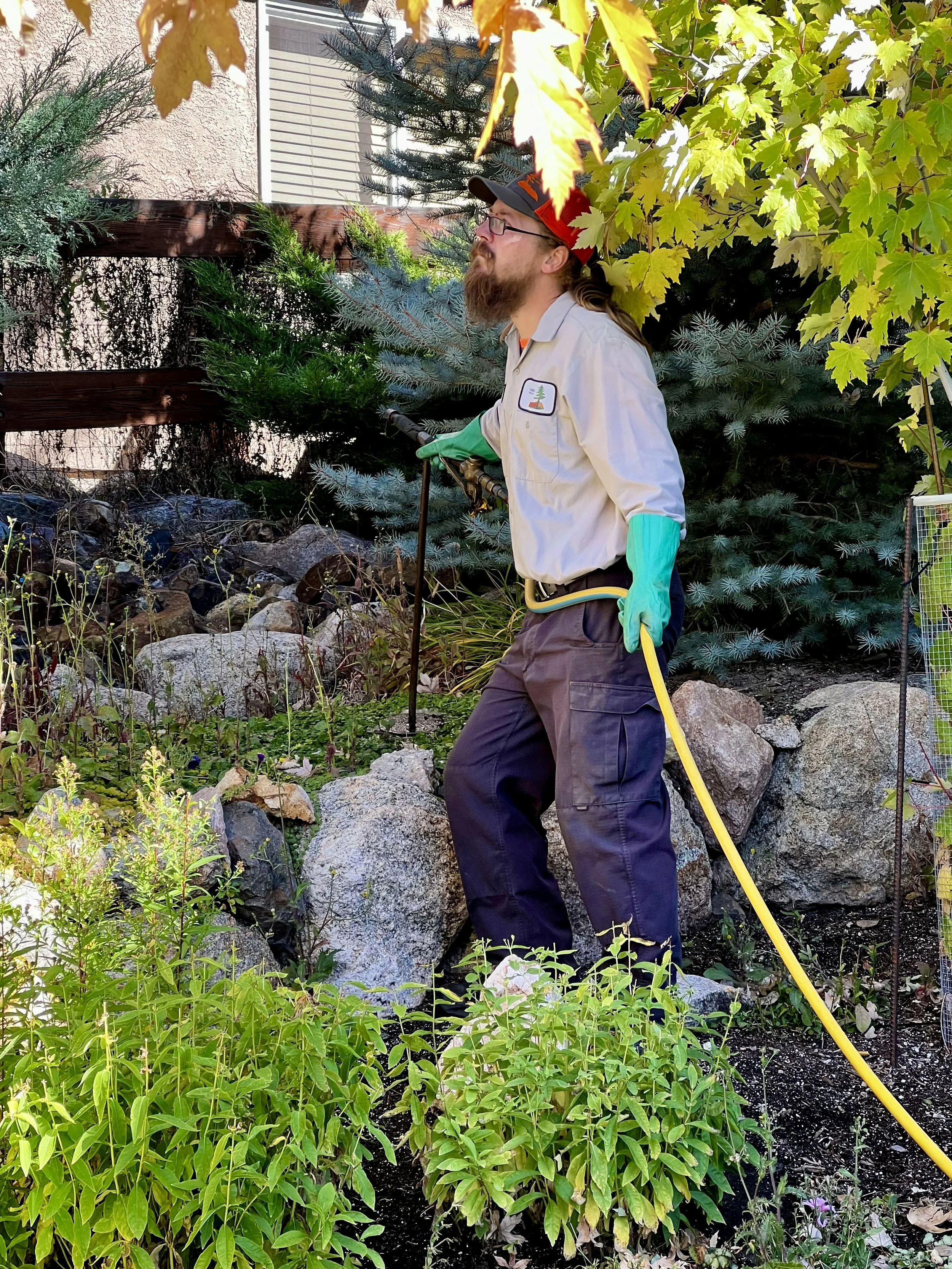
A simple rule: if about four weeks go by without snow on the ground, water. Pick a day when it's above 40°F and the ground isn't frozen, and water around midday so it soaks in before nighttime temperatures drop. Use a hose, and disconnect it from the spigot when you're done so it doesn't freeze.
Some trees need winter water more than others:
Newly planted trees. A tree takes about one year per inch of trunk diameter to get established. A 3 inch tree planted last spring is still vulnerable.
Evergreens. They keep losing moisture through their needles all winter.
Shallow-rooted species like linden, birch, and Norway and silver maple.
Trees on south and west exposures, near pavement or in windy spots.
Shrubs benefit too. In dry winters, water them from October through March.
Step 3: Wrap Thin-Barked Young Trees
Young trees with thin, smooth bark are the most prone to sunscald and frost cracks. On the Front Range that includes honeylocust, maple, linden and ash. Sunscald shows up as sunken, discolored or peeling bark, usually on the southwest side of the trunk.
To wrap a tree, use commercial grade tree wrap from a garden center. Start at the base and wind upward to the first branches, overlapping each layer so water sheds off. Fasten it at the top without wrapping too tightly.
Take the wrap off in spring. Left on year round, it holds moisture against the bark and gives insects a place to hide. Not every tree needs wrapping every year. Once the bark thickens and roughens with age, you can usually stop.
If deer are rubbing your trees, a trunk guard or a simple wire cage does double duty.
Step 4: Mulch the Root Zone
Mulch is cheap insurance. A 2 to 4 inch layer of wood chips over the root zone holds moisture, insulates the soil against freeze and thaw cycles, and reduces competition from grass.
The key is placement. Spread mulch in a wide, flat ring and pull it a few inches away from the trunk. Mulch piled up against the bark, often called a mulch volcano, traps moisture, invites rot and gives rodents a cozy place to chew bark all winter.

Step 5: Feed Now, Prune Later
Fertilize in fall. Trees put their energy into roots and store reserves for winter and spring growth. That makes fall one of the best time for deep root fertilization. Front Range soils tend to be heavy clay and alkaline, which can lock up nutrients trees need, so a blend made for local conditions makes a difference.
Prune dead wood now. Bare branches make it easy to spot dead, broken or crossing limbs. Removing them before snow arrives lowers the risk of them coming down on your roof, car or fence.
Save major pruning for late winter. For most species, late winter is the best time for structural pruning, while trees are fully dormant and before spring growth begins.
You can see everything we do for trees this time of year on our fall tree care page.
Step 6: Watch for Early Snow
The most dangerous storms are the early ones. Wet October snow landing on trees that still have their leaves can snap limbs and split trunks in a single night.
If heavy snow is piling up, gently push it off lower branches from below with a broom. Lift up, don't shake down. Leave ice-covered branches alone, since they break easily. For anything large, hanging or near power lines, stay clear and call a professional for storm damage help.
Common Winter Tree Care Mistakes
Stopping watering when the sprinklers shut off. Dry winters do more damage than cold ones.
Watering at the trunk. The roots that take up water are out at the drip line and beyond.
Mulch volcanoes. Mulch against the trunk causes rot and pest problems.
Leaving tree wrap on all year. Wrap goes on in fall and comes off in spring.
Heavy fall pruning of live wood. Take out dead wood now. Save shaping for late winter.
De-icing salt near trees. Salt runoff from driveways and walks damages roots and browns evergreen needles. Use sand or a salt-free product near trees where you can.
When to Call an Arborist
Some things are worth a professional look before winter:
Dead or hanging branches over your house, driveway or structures
Cracks or splits in the trunk or where large limbs meet
Mushrooms or fungus growing at the base of the tree
A tree that's started leaning
Ash trees, now that emerald ash borer has been confirmed in Colorado Springs
Tall Timbers has cared for trees on the Front Range since 2000. Our ISA Certified Arborists offer free tree evaluations in Colorado Springs, Castle Rock, Parker, Monument and the surrounding area. We'll walk your property, tell you what each tree needs before winter and what can wait. You can give us a call today or click the link below to set up your free evaluation.
Winter Tree Care FAQ:
-
About 10 gallons per inch of trunk diameter, measured at knee height. A tree with an 8 inch trunk needs about 80 gallons, applied slowly under the branches.
-
You don't fully stop. Ease off before the first hard freeze, then water about once a month through winter whenever it's been dry for several weeks.
-
No. Snow cover provides moisture as it melts. Water only when the ground is bare, not frozen, and it's above 40°F.
-
In spring, once temperatures settle. Wrap left on year round holds moisture against the bark and shelters insects.
-
No. Deep watering, mulching and wrapping all work until the ground freezes, and winter watering continues through March.