
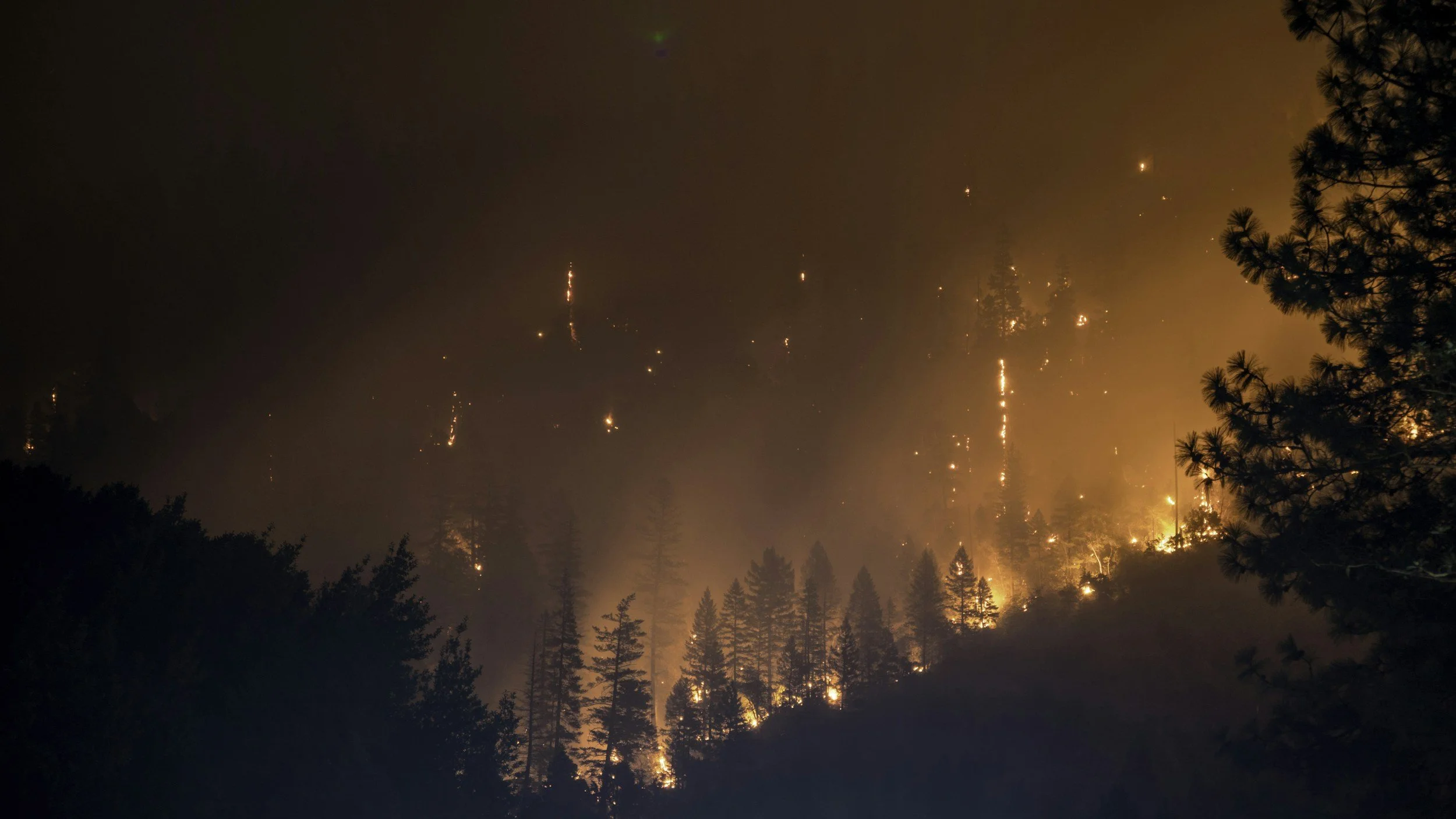
Fire Mitigation & Defensible Space in Colorado
The trees and open space that make your Colorado property beautiful are the same things that put it at risk. Since 2000, Tall Timbers has helped Front Range homeowners and HOAs, from Black Forest to Castle Rock, build defensible space that protects their homes. Our ISA Certified Arborists know how to reduce risk without sacrificing the trees and privacy you moved here for.
What Is Defensible Space?
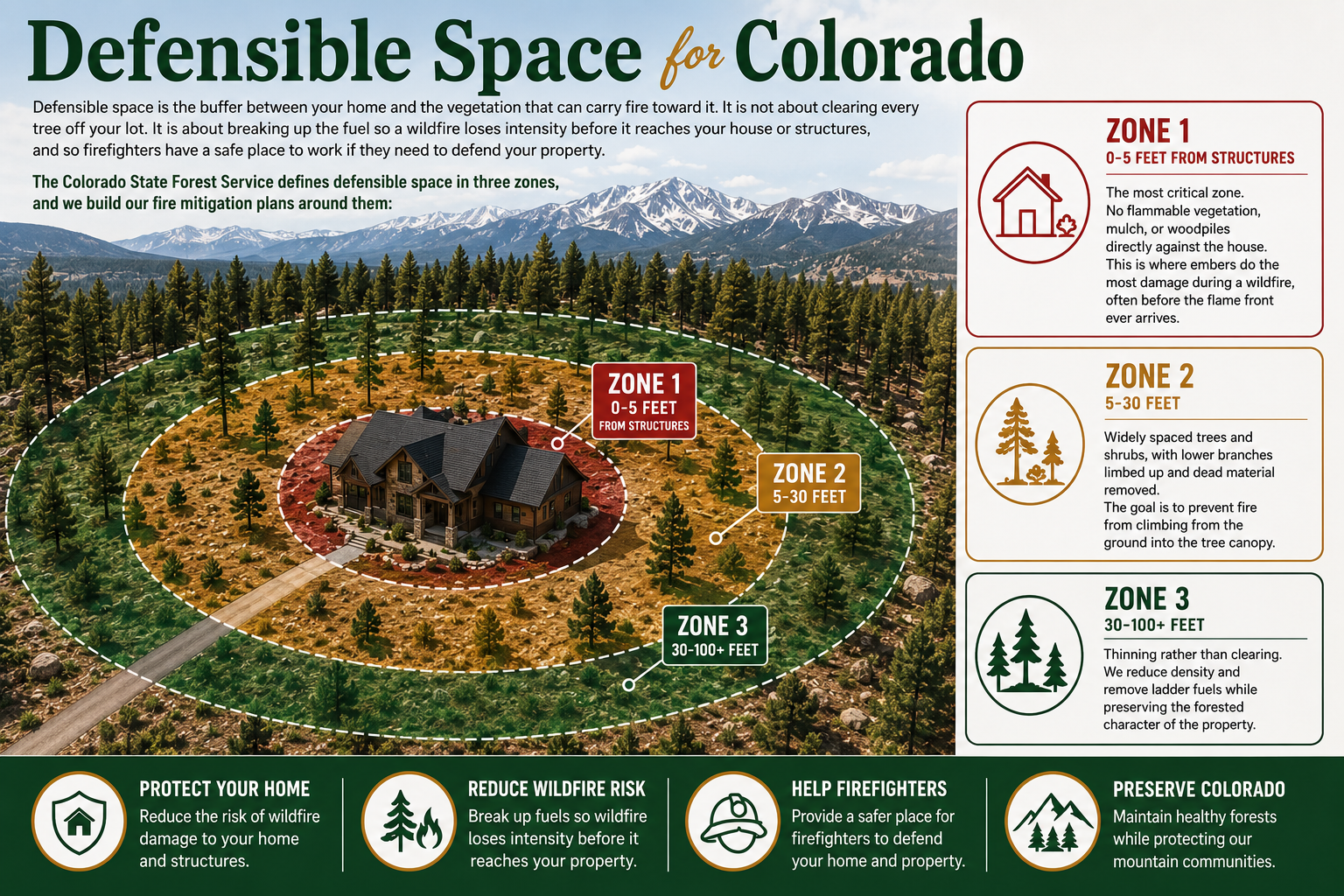
Defensible space is the buffer between your home and the vegetation that can carry fire toward it. It is not about clearing every tree off your lot. It is about breaking up the fuel so a wildfire loses intensity before it reaches your house or structures, and so firefighters have a safe place to work if they need to defend your property.
The Colorado State Forest Service defines defensible space in three zones, and we build our fire mitigation plans around them:
Zone 1 (0 to 5 feet from structures): The most critical zone. No flammable vegetation, mulch, or woodpiles directly against the house. This is where embers do the most damage during a wildfire, often before the flame front ever arrives.
Zone 2 (5 to 30 feet): Widely spaced trees and shrubs, with lower branches limbed up and dead material removed. The goal is to prevent fire from climbing from the ground into the tree canopy.
Zone 3 (30 to 100+ feet): Thinning rather than clearing. We reduce density and remove ladder fuels while preserving the forested character of the property.
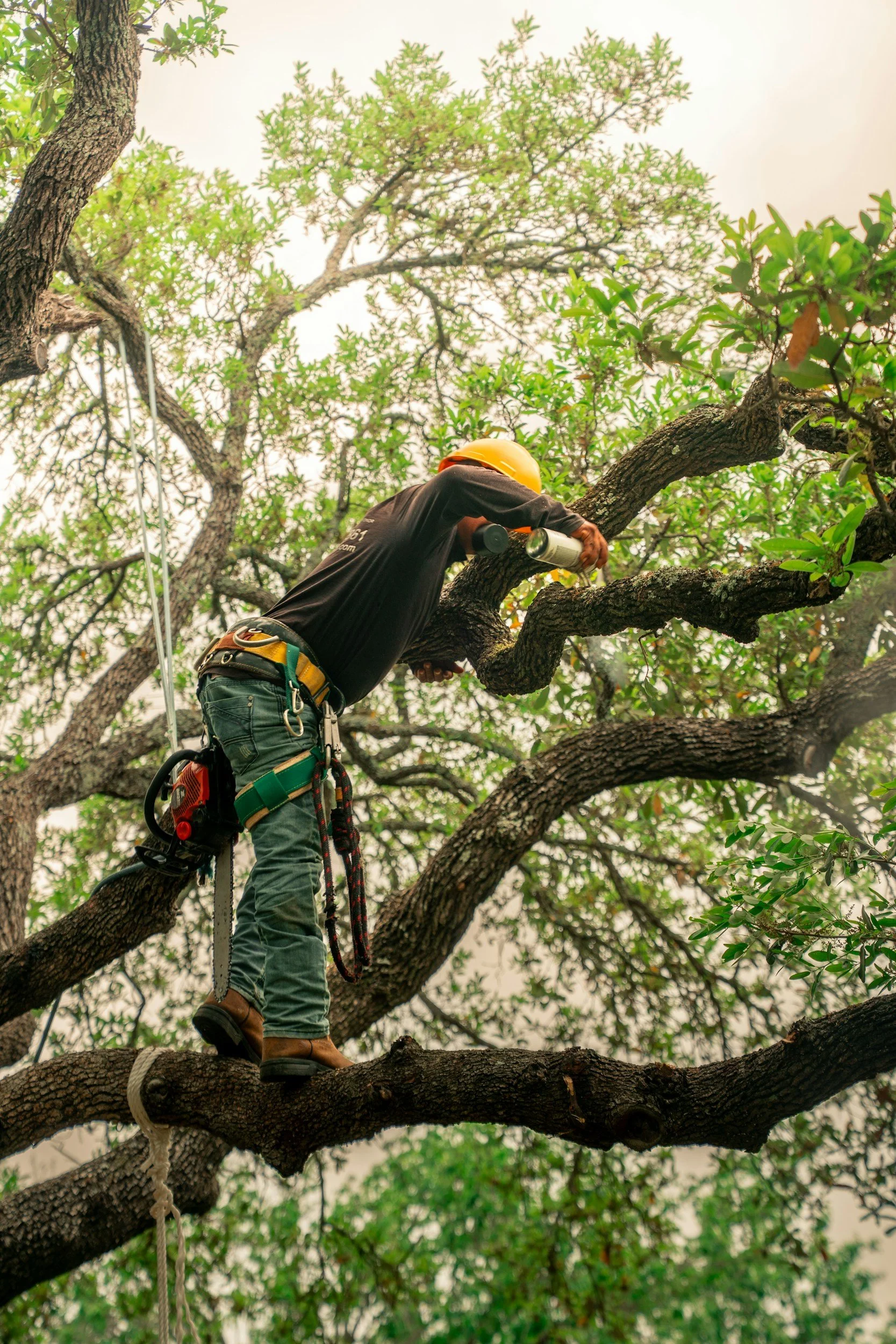
Our Fire Mitigation Process
Ladder Fuel Removal: Low branches and understory brush give ground fires a path into the tree canopy. We remove these fuels so a grass or brush fire stays on the ground where it is far easier to control.
Canopy Thinning and Spacing: Tightly packed trees let fire jump from crown to crown. Our arborists selectively thin stands to create the spacing that slows or stops that spread, without clear-cutting the property.
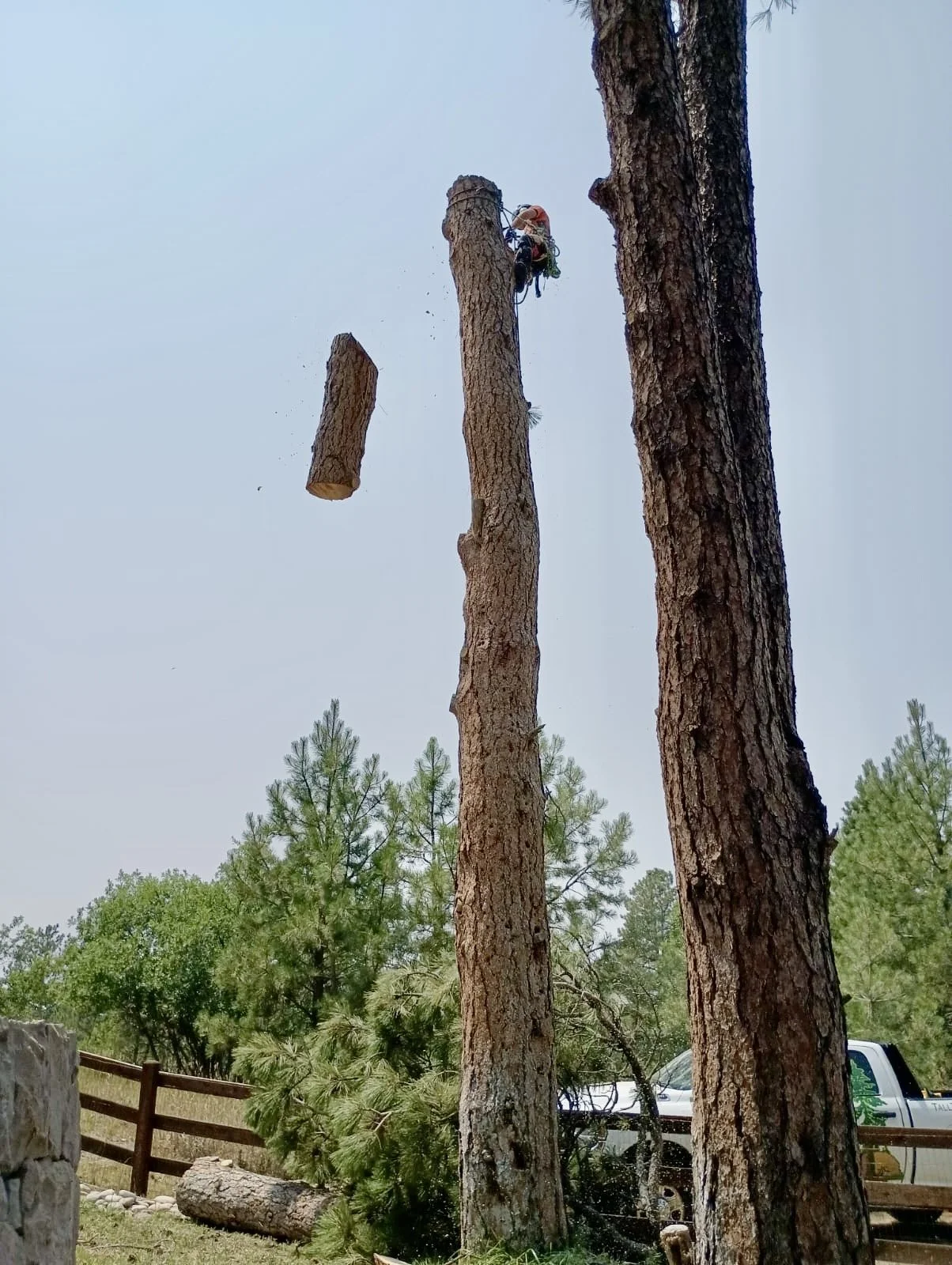
Dead and Diseased Tree Removal: Standing dead wood and beetle-killed trees are some of the most volatile fuel on a property. Identifying and removing them is often the highest-impact step in a mitigation plan.
Brush and Debris Clearing: Clearing dry brush and accumulated woody debris from around structures, decks, and propane tanks closes off the paths fire uses to reach your home. (Grass mowing and lawn maintenance stay with the homeowner. Our work focuses on trees, shrubs, and brush.)
Pruning for Defensible Space: Limbing trees up 6 to 10 feet off the ground (depending on tree height) removes the connection between surface fuels and tree crowns.
Every plan follows El Paso County and Colorado Springs Fire Department guidelines, and we adapt the same approach for Douglas County properties in Castle Rock and Parker.
Fire Mitigation for HOAs and Communities
Many of the neighborhoods we work in, especially in Black Forest, Monument, and the wooded pockets of Castle Rock and Parker, are managed by HOAs with community-wide fire mitigation responsibilities. We work directly with HOA boards and community managers to:
Evaluate open space and common areas for fuel reduction needs
Create phased mitigation plans that fit HOA budgets and reserve schedules
Provide documentation for county and fire department compliance
Coordinate mitigation across multiple properties for consistent, community-wide defensible space
If you sit on an HOA board or manage a community with wildfire exposure, we are glad to walk a property with you and put together a plan.
Serving: Colorado Springs · Black Forest · Monument · Falcon · Woodland Park · Castle Rock · Castle Pines · Parker · Fountain · Manitou Springs
Fire Mitigation FAQ
-
No. Good fire mitigation thins and spaces vegetation to slow fire spread while keeping the trees and privacy that make your property what it is. Clear-cutting is rarely necessary and usually not what we recommend.
-
In most cases, yes. We follow El Paso County and Colorado Springs Fire Department defensible space guidelines, and we can provide documentation of completed work for HOA or insurance purposes.
-
Most properties need a maintenance pass every 1 to 3 years, depending on how fast vegetation regrows and local conditions. If you are ever curious where your property stands, call 719-528-8141 for a free property evaluation.
-
Many insurers now factor defensible space and mitigation work into wildfire risk pricing, and some offer discounts or require it for coverage in high-risk zones. We recommend confirming specifics with your insurance provider, and we can provide documentation of completed work.
-
Yes. We will walk your property, assess fuel loads and risk zones, and put together a mitigation plan at no cost.
Why Tall Timbers for Fire Mitigation
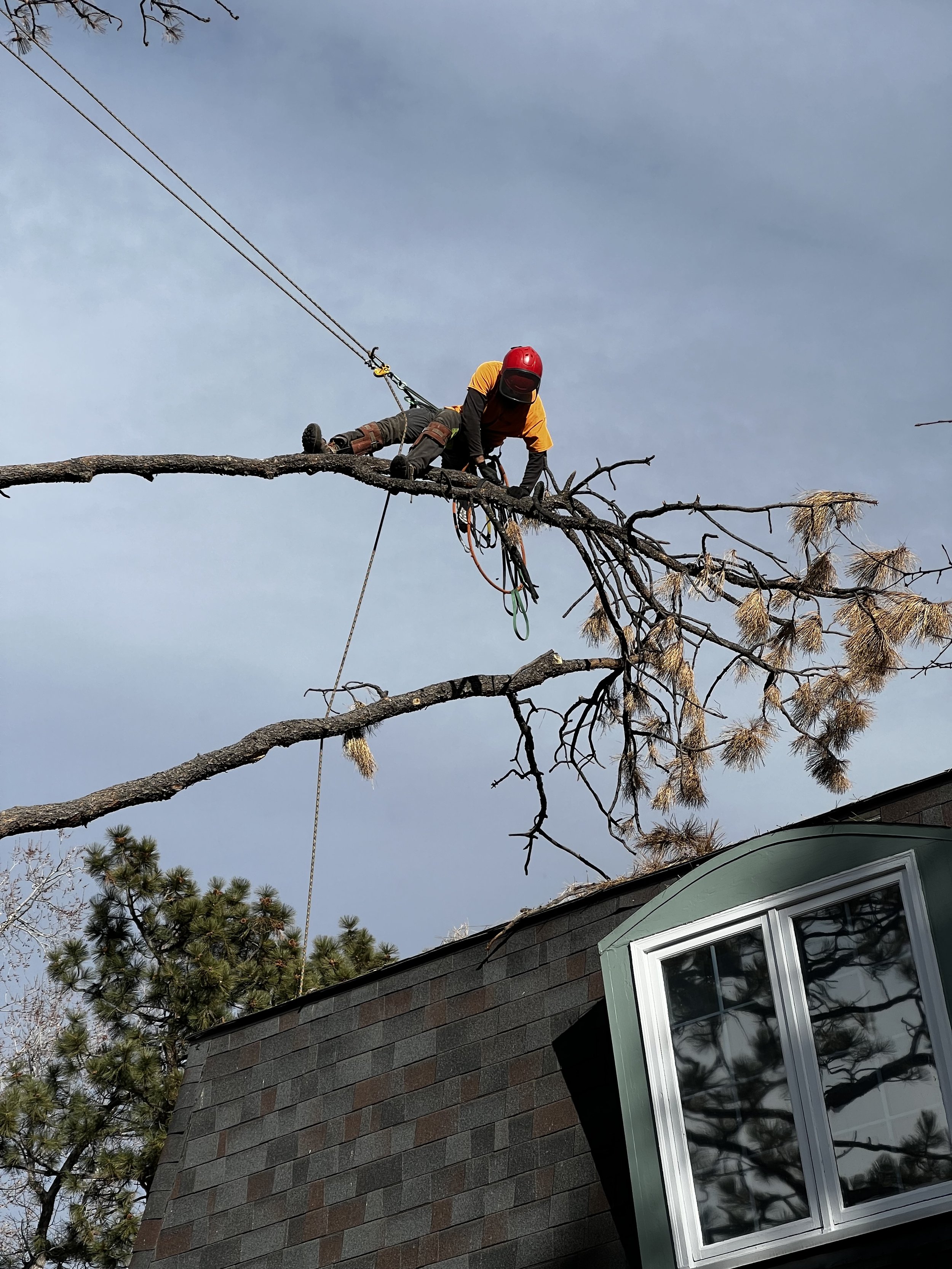
✔ 25+ Years of Experience Serving the Front Range – Trusted local tree care professionals
✔ ISA Certified Arborists – Expert tree care backed by industry-best practices
✔ Fully Licensed & Insured – Protecting your property and landscape
✔ HOA & County Compliance Documentation – Plans that meet fire department and insurance requirements
✔ Specialized Knowledge of Colorado Trees – Experienced with pines, spruce, aspens, and native species
✔ Family-Owned Colorado Company – Professional, dependable, and community-focused
✔ Free Estimates & Honest Pricing – Transparent recommendations with no hidden fees