
Warmer Winter Temps Bring Higher Pine Beetle Risks
Mountain Pine Beetle Risk Is High This Year for Colorado Pine Trees
At Tall Timbers Tree & Shrub Service, we have spent 25 years caring for trees across Colorado Springs, Black Forest, Monument, Castle Rock, and surrounding Front Range communities. Based on current conditions, the mountain pine beetle is shaping up to be a serious concern this year, largely due to the unusually warm winter we have experienced so far.
Mountain pine beetles are a native insect in Colorado, but when weather patterns shift and trees become stressed, populations can increase rapidly. Without proactive care, pine trees in both urban and forested landscapes may face significant risk.
What Is the Mountain Pine Beetle
The mountain pine beetle, scientifically known as Dendroctonus ponderosae, is a bark beetle that primarily attacks pine species such as ponderosa pine, lodgepole pine, and Scots pine. In areas like Black Forest and Monument, where dense pine stands are common, the risk of rapid spread is even higher when conditions are favorable.
In healthy forest systems, these beetles help remove weakened trees. Problems arise when environmental conditions allow beetle populations to grow beyond natural limits.
Why Warm Winters Increase Beetle Activity
Cold winter temperatures historically helped control mountain pine beetle populations by killing overwintering larvae beneath the bark. When winters remain mild, significantly more beetles survive into spring and summer.
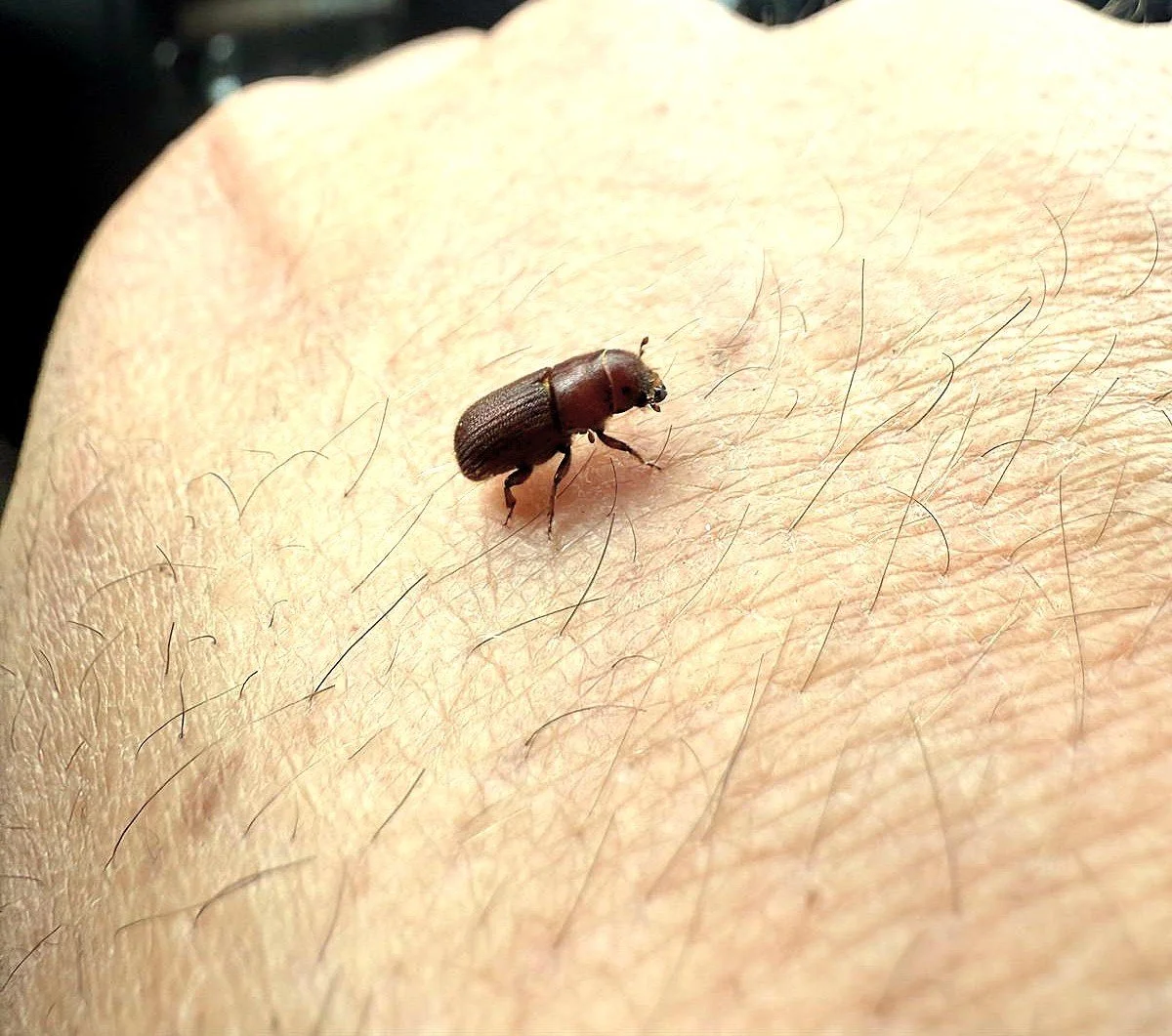
Warm winters also affect tree health. Trees may not fully enter dormancy and can lose stored energy reserves. Combined with drought or inconsistent watering, this weakens their natural defense systems and leaves them vulnerable to attack, especially in higher elevation and pine heavy areas such as Monument and the Black Forest.
How Mountain Pine Beetles Kill Pine Trees
Mountain pine beetles attack trees in large numbers. Adult beetles bore through the bark to lay eggs and introduce a blue stain fungus that spreads through the tree’s vascular system.
As larvae develop, they feed beneath the bark and disrupt the tree’s ability to transport water and nutrients. Once this process is underway, even trees that appear green and healthy often decline rapidly and die within months.
Why Tree Health Is the Best Defense
Healthy pine trees can sometimes defend themselves by producing resin that pushes attacking beetles out of the bark. This defense response requires energy and access to water.
Trees that are stressed by drought, compacted soils, root damage, construction activity, overcrowding, or poor soil conditions cannot produce enough resin to defend themselves effectively. Mountain pine beetles actively seek out these weakened trees, making tree health the most critical factor in prevention, particularly in pine dominant communities like Black Forest, Monument, and Castle Rock.
Signs of Mountain Pine Beetle Activity
Early detection is essential. Property owners should watch for pitch tubes or sap blobs on the trunk, fine sawdust near the base of the tree, increased woodpecker activity, and needles that begin to fade from green to yellow and eventually red.
By the time needles turn red, the beetles have typically already exited the tree. This is why regular inspections are so important. If you are ever unsure you can contact Tall Timbers for a free evaluation and another set of eyes on your trees just to make sure there is no current beetle activity.
What Homeowners Can Do Now
While large scale outbreaks are difficult to stop, individual properties can take meaningful steps to reduce risk.
At Tall Timbers, our approach focuses on improving overall tree vigor through proper watering and soil care, identifying high risk or stressed trees early, removing infested trees promptly to reduce spread, and recommending long term landscape strategies that improve resilience.
Preventive treatments may be appropriate for high value trees, but timing and professional evaluation are critical for success.
Our Recommendation for Colorado Property Owners
This is not a year to take a wait and see approach. With warm winter conditions already in place, proactive tree care will be the difference between preservation and loss.
If you have pine trees on your property in Colorado Springs, Black Forest, Monument, Castle Rock, or surrounding areas, now is the time to schedule a professional evaluation.
Our certified arborists at Tall Timbers Tree & Shrub Service are here to help protect your trees, your property, and the long term health of Colorado’s urban forest.
Call today or click below to request an inspection to stay ahead of mountain pine beetle activity before damage occurs.