What Is Plant Health Care and Why Does It Matter for Your Trees and Shrubs?
Have you ever noticed a tree that looked fine one year, only to decline rapidly the next? Often, the warning signs were there months earlier we just didn't know what to look for. That's where Plant Health Care comes in.
If you've ever heard us at Tall Timbers talk about "Plant Health Care," you may have wondered what that actually means. In the tree care industry, it's a term we use every day. But for many homeowners, it's not a phrase you hear often.
Simply put, Plant Health Care refers to everything we do to keep trees and shrubs healthy, resilient, and thriving long-term. It's proactive care, not just emergency work.
Plant Health Care Explained in Simple Terms
Most people think of tree care as pruning or removals. While those services are important, they're only one part of the picture.
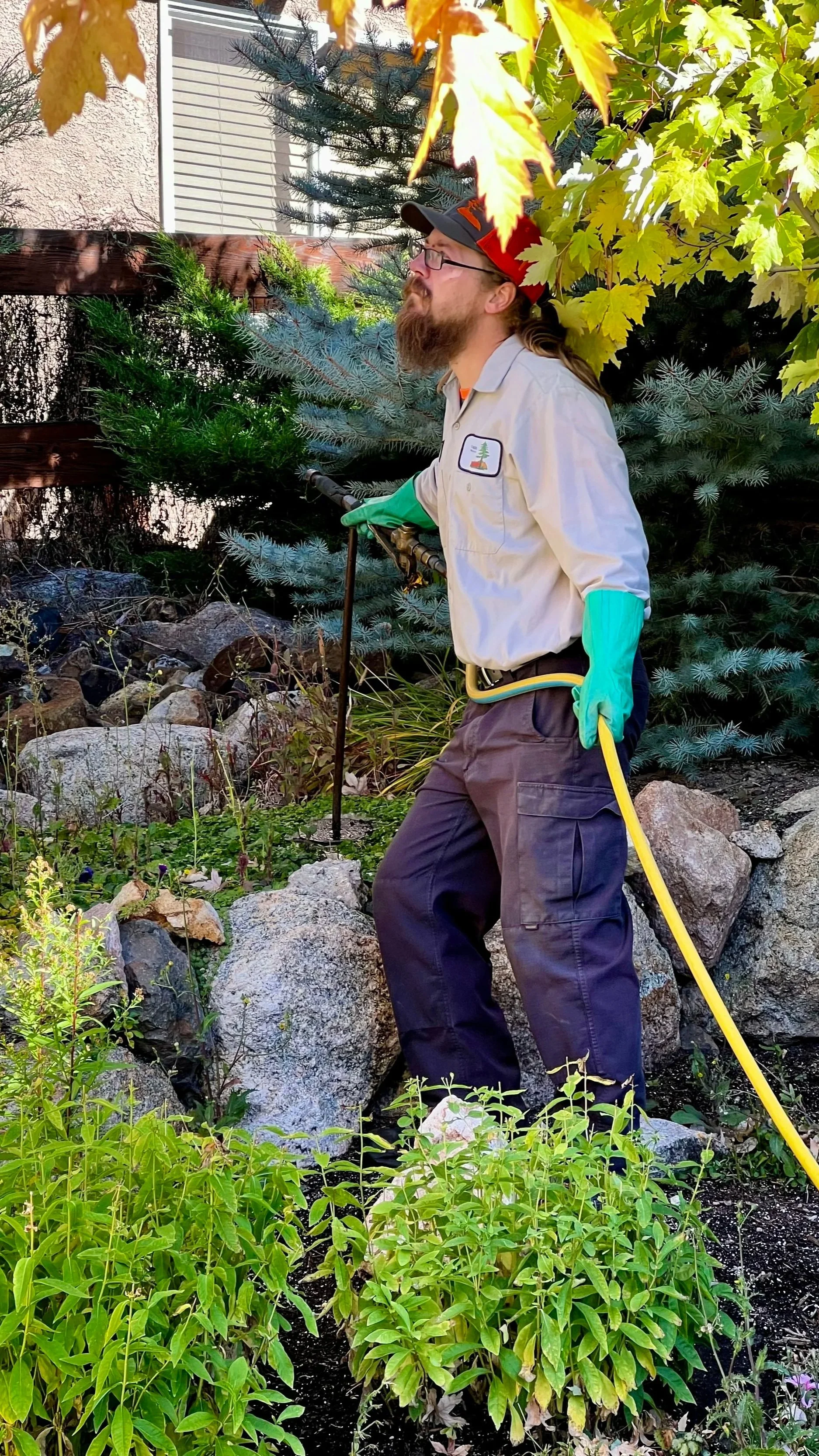
Plant Health Care includes all the treatments and practices that support the overall health of trees and shrubs, including:
• Pest management and insect control
• Disease monitoring and treatment
• Deep root feeding and fertilization
• Proper watering guidance and drought stress support
• Soil improvement and air spading
• Root collar excavation
• Ongoing monitoring and inspections
Instead of waiting for a tree to decline, Plant Health Care focuses on strengthening trees so they can better defend themselves against the stresses they face.
Why Plant Health Care Is So Important in Colorado?
Here along the Front Range in areas like Colorado Springs, Black Forest, Monument, and Castle Rock, our trees face unique stress factors.
We deal with:
• Dry conditions and drought cycles
• Compacted soils
• Construction damage
• Temperature extremes
• Insect pressure such as Ips beetles and Mountain Pine Beetles (which primarily attack pine and spruce trees)
When trees are stressed, their natural defense systems weaken. That's when pests and disease can take hold. A stressed pine can go from healthy to dead in a single season when bark beetles attack. But properly maintained trees can often resist these same pests.
Healthy trees are far more capable of defending themselves. Plant Health Care helps ensure they have the nutrients, root space, and soil conditions needed to stay strong.
The Cost of Prevention vs. Removal:
Investing in ongoing tree care is significantly more cost-effective than emergency removals. A mature tree that dies from preventable stress or pest infestation can cost thousands to remove and decades to replace. Regular Plant Health Care protects both your landscape investment and your property value.
What Does Deep Root Feeding Do?
Deep root feeding is one of the most common Plant Health Care services we provide. This process injects nutrients directly into the root zone where trees can absorb them most effectively.
Unlike surface fertilization, deep root feeding delivers nutrients below compacted soil layers, encouraging stronger root growth and improved overall vigor.
Best timing: Spring and fall are ideal for deep root feeding. In spring, trees are emerging from dormancy and actively growing new roots. In fall, they're storing energy for winter. Both periods maximize nutrient uptake.
What Is Air Spading and Why Does It Matter?
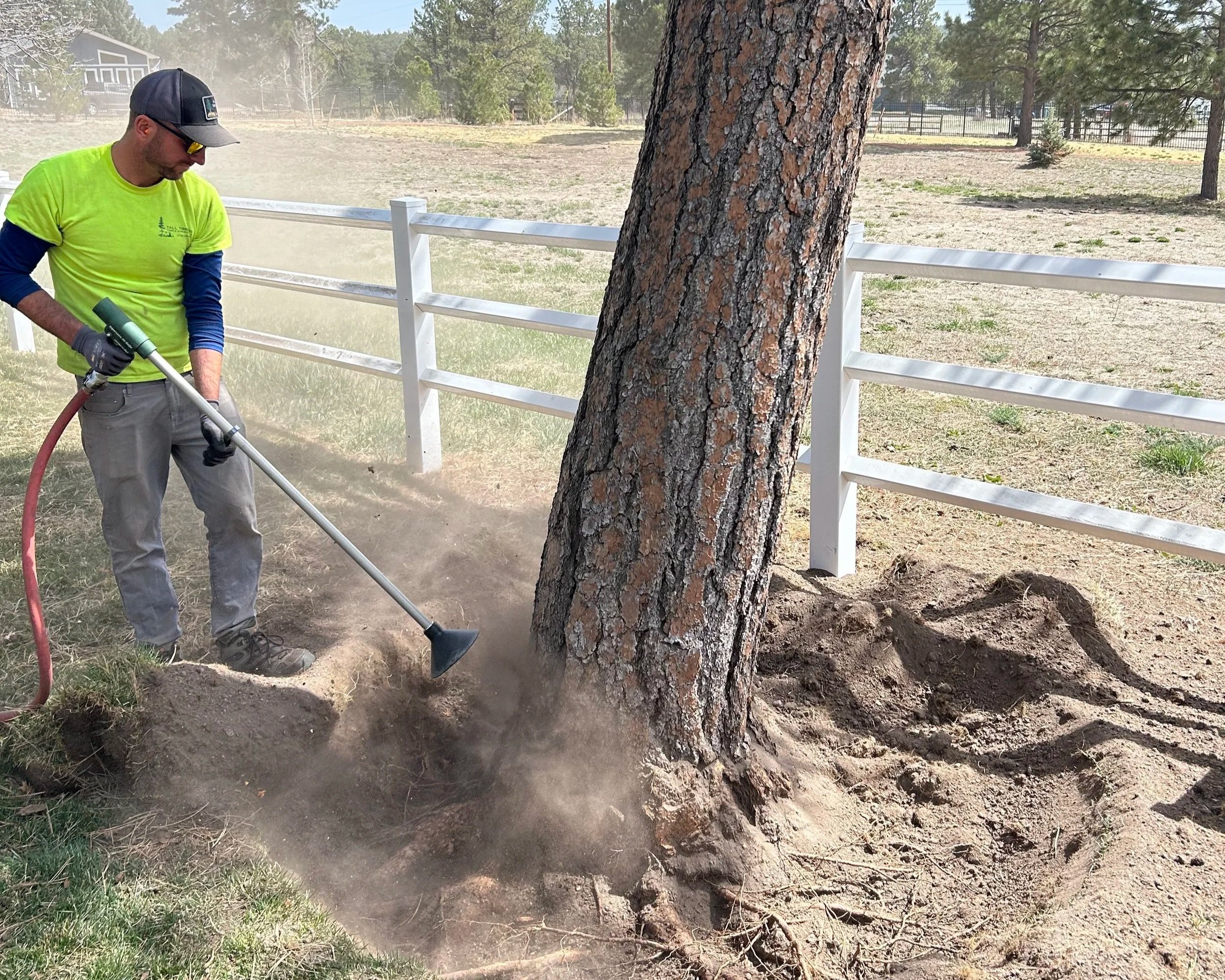
Air spading is a specialized technique that uses compressed air to loosen compacted soil without damaging roots. Compacted soil is one of the most overlooked causes of tree decline.
When soil is compacted, roots can't access oxygen, water, or nutrients efficiently. Air spading restores soil structure and improves root health, which directly impacts the entire tree.
We added air spading to our services because healthy roots mean healthy trees.
Understanding Root Collar Excavation
Root collar excavation involves carefully removing excess soil, mulch, or debris from around the base of a tree to expose the root flare the area where the trunk transitions to roots.
When this area is buried too deeply (often from over-mulching or poor planting), it can lead to:
• Girdling roots that strangle the tree
• Bark decay and disease
• Reduced water and nutrient uptake
Excavating the root collar allows the tree to breathe properly and can prevent serious long-term decline.
We Have a Team Dedicated to Plant Health Care?
Plant Health Care isn't an add-on service for us. It's a dedicated department within Tall Timbers Tree & Shrub Service.
We have trained specialists whose primary focus is monitoring tree and shrub health, identifying stress early, and implementing proactive solutions. Their goal is simple: protect your investment and extend the life of your landscape.
Instead of reacting to problems after trees begin to decline, our Plant Health Care team works to prevent issues before they become costly or irreversible.
The Difference Between Reactive and Proactive Tree Care?
Reactive care happens after a tree is already struggling. Proactive care strengthens trees so they're less likely to struggle in the first place.
Plant Health Care is about long-term protection, not short-term fixes.
Example: We recently worked with a homeowner in Black Forest whose mature blue spruce was showing early signs of stress slight needle discoloration and reduced growth. Through a combination of deep root feeding, soil amendment, and targeted pest monitoring, we were able to reverse the decline. Today, that tree is thriving. Had we waited until the tree was severely compromised, removal might have been the only option.
Protect Your Landscape Investment
If you're unsure whether your trees could benefit from deep root feeding, pest management, soil improvement, or ongoing monitoring, our team is here to help.
At Tall Timbers Tree & Shrub Service, we're committed to rejuvenating our earth one tree at a time. Plant Health Care is one of the most important ways we fulfill that mission.
Think of us as your trees' long-term healthcare provider, not just their emergency room. We're here to partner with you in maintaining a healthy, vibrant landscape for years to come.
If you'd like to learn more or schedule an evaluation, click below and contact our team today.