Emerald Ash Borer Has Officially Arrived in Colorado Springs: What Homeowners Need to Know Right Now
If you own an ash tree in Colorado Springs, today's (August 5, 2026) news changes things. The City of Colorado Springs and the Colorado State Forest Service have confirmed that emerald ash borer, the invasive beetle that has killed tens of millions of ash trees across North America, has been detected within city limits.
We have been watching this pest move down the Front Range for years, from Boulder in 2013 to more than 20 Colorado communities since. Colorado Springs was always a matter of when, not if. That day is here, and it changes the timeline for every ash tree owner in the Pikes Peak region.
What Emerald Ash Borer Actually Is
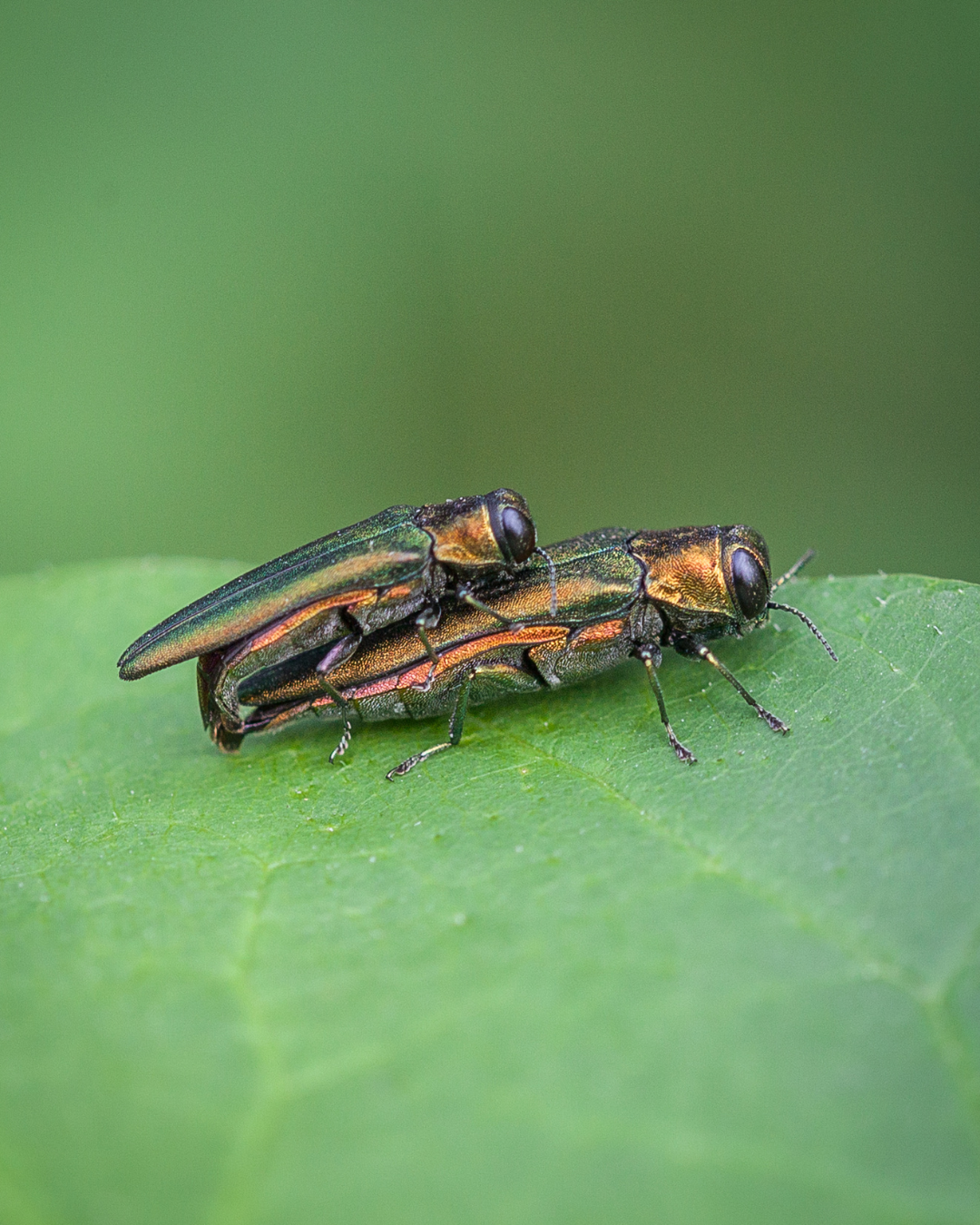
Emerald Ash Borer
Emerald ash borer, often shortened to EAB, is a small metallic green beetle native to northeastern Asia. It attacks ash trees exclusively, tunneling under the bark as larvae and cutting off the tree's ability to move water and nutrients. Once a tree is infested, it typically dies within two to four years without treatment. Left unmanaged, EAB has the potential to destroy a significant share of the city's urban canopy in the years ahead, since ash trees make up roughly one in five trees in Colorado Springs.
How to identify an adult EAB:
Vibrant metallic green body with a coppery or purple abdomen
About 1/3 to 1/2 inch long, roughly the size of a penny (Lincoln’s head)
Larvae are creamy white and found under the bark, not visible from outside
How to identify an ash tree:
Compound leaves with 5 to 11 leaflets arranged opposite each other on the branch
Grayish brown bark with diamond shaped ridges on mature trees, smoother and greener on young trees
Buds and branches grow directly across from one another, not staggered
Why This Matters More Than It Might Seem
Ash trees are everywhere in this city, lining neighborhood streets, shading parks, and anchoring landscapes planted decades ago. A confirmed detection means the beetle is already established somewhere nearby, and infestations are notoriously hard to spot early. EAB starts as an egg tucked into bark crevices, hatches into a larva that tunnels beneath the bark for up to two years, then emerges as an adult beetle the following spring to mate and start the cycle over. Most of that damage happens out of sight.
Signs your ash tree may be infested:
S-shaped tunnels visible beneath peeling or damaged bark
Small, D-shaped exit holes in the bark
Unusual sucker sprouts growing near the base of the trunk
Increased woodpecker activity, since birds feed on the larvae underneath
That is the trap with EAB. Waiting for visible symptoms means waiting too long. One note of caution: a similar-looking insect, the green flathead borer, is often mistaken for EAB but does not attack living trees, so a professional identification matters before you assume the worst.
What You Should Do Now
1. Find out if you have an ash tree. If you are not sure, we can identify it for you in a few minutes.
2. Get healthy ash trees evaluated for preventive treatment. Systemic insecticide treatments, including trunk injections, are highly effective when applied to a healthy tree before infestation takes hold. This is the single most important window of opportunity homeowners have right now.
3. Do not wait on declining trees. If an ash tree already shows canopy thinning, bark cracking, or D-shaped exit holes, treatment may no longer be an option and removal could be the safer, more cost-effective path before the tree becomes a hazard.
4. Skip the firewood shortcuts. EAB spreads fastest through moved firewood. If you are removing an infested ash, keep the wood local and let a professional handle disposal.
5. Report what you see. If you spot signs of infestation, the city encourages residents to report it to their local municipal forester in addition to getting a professional opinion.
Treatment Options for Ash Trees
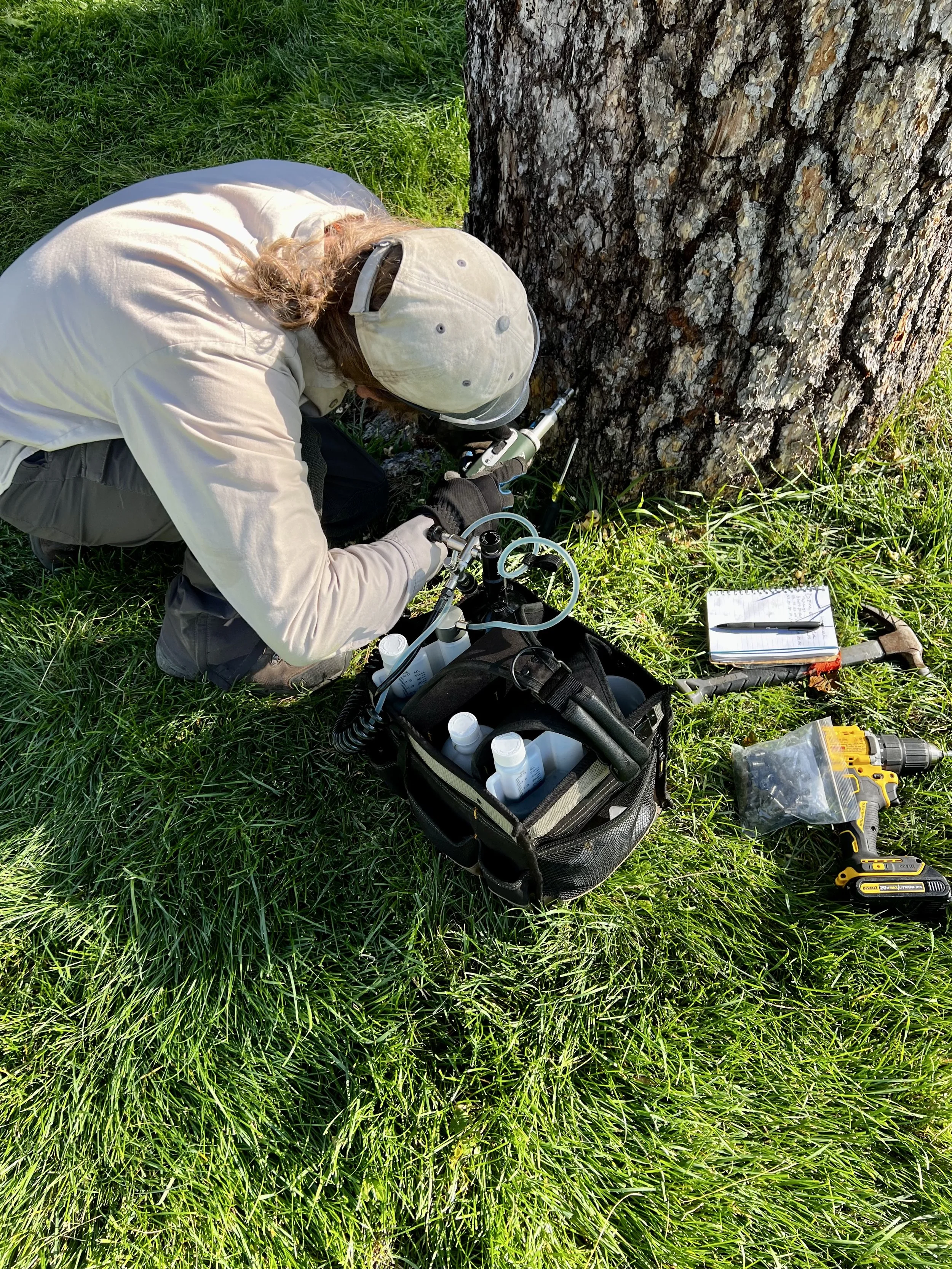
Our ISA Certifieded Arborist performing a trunk injection.
Trunk injections with emamectin benzoate. This is the most effective and longest lasting treatment available, protecting a tree for up to two years per application. It is applied directly into the trunk, so there is minimal exposure to the surrounding soil, lawn, or nearby plants. This is our first recommendation for most healthy ash trees in Colorado Springs right now.
Timing matters. Treatments are most effective when applied in spring before adult beetles emerge and begin laying eggs. A tree treated after significant canopy loss has already occurred has a much lower chance of recovery, which is why an early evaluation matters more than the specific product used.
When removal makes more sense than treatment. If more than 30 to 50 percent of the canopy is already thinning or dead, treatment is rarely worth the cost. At that point, a planned removal protects your property from the safety risk of a dying tree and gives you the option to replant with a more resilient species.
How Tall Timbers Can Help
We have been caring for Front Range trees since 2000, and our ISA Certified Arborists have been preparing for this exact moment. Whether you need an ash tree identified, a treatment plan built for a healthy tree, or a safe removal for one that is already too far gone, we can walk your property with you and give you the answers about what your tree needs.
Feel free to click the link below or call us at 719-528-8141 for a free property evaluation.
-
Yes. The City of Colorado Springs and the Colorado State Forest Service confirmed detection of EAB within city limits, ending years of the beetle spreading toward the Pikes Peak region from the north.
-
Look for compound leaves with 5 to 11 leaflets arranged directly opposite each other, along with branches and buds that grow directly across from one another rather than staggered. If you are still not sure, a certified arborist can identify it in a few minutes.
-
For a healthy or lightly infested tree, ongoing treatment is almost always less expensive than removing a mature tree and replacing the shade, privacy, and property value it provides. For a tree that is already heavily declined, removal is typically the more cost-effective and safer choice in the long run.
-
Trunk injections have a systemic residual impact lasting beyond the season of treatment up to two years from injection. Soil applied treatments generally need to be reapplied annually.
-
A trunk injection is a treatment method where a systemic insecticide is delivered directly into the tree's trunk through small injection points, rather than being sprayed on the tree or applied to the surrounding soil. The tree's own vascular system then carries the product throughout the canopy, protecting it from the inside out. Because it goes straight into the tree, it minimizes exposure to nearby lawns, gardens, pets, and pollinators compared to soil or spray applications.
-
Trunk injection pricing is based on the tree's DBH, or diameter at breast height, which is the trunk's diameter measured about 4.5 feet above the ground. The insecticide dose is calculated per inch of DBH, so a larger trunk needs more product to fully protect the canopy, and the cost scales up accordingly. This is why we measure the tree on site before quoting a price rather than giving a flat rate over the phone. It also means two ash trees that look similar in height can cost different amounts to treat if their trunk diameters differ.