
Common Aspen Tree Diseases in Colorado and How to Manage Them
If you live in Colorado, you know the magic that the aspen trees bring to our landscapes. They're one of the first things people notice about our beautiful state. But here's the thing: aspens can be finicky. They deal with a lot on the front range: our dry winters, late frosts, clay soils at lower elevations, elk rubbing, and a whole lineup of fungal diseases that love Colorado's cool, wet springs just as much as we do. The good news? Most aspen problems are manageable if you catch them early. Our team works with aspens all the time across Colorado Springs, Castle Rock, Monument, and the surrounding communities, and we've put together this guide to help you recognize what's going on with your trees - and what to do about it.
Aspen Tree Diseases in Colorado
Aspens face a range of diseases, from leaf-level fungal infections to cankers that can take down an entire tree. Here's what we see most often in our part of Colorado.
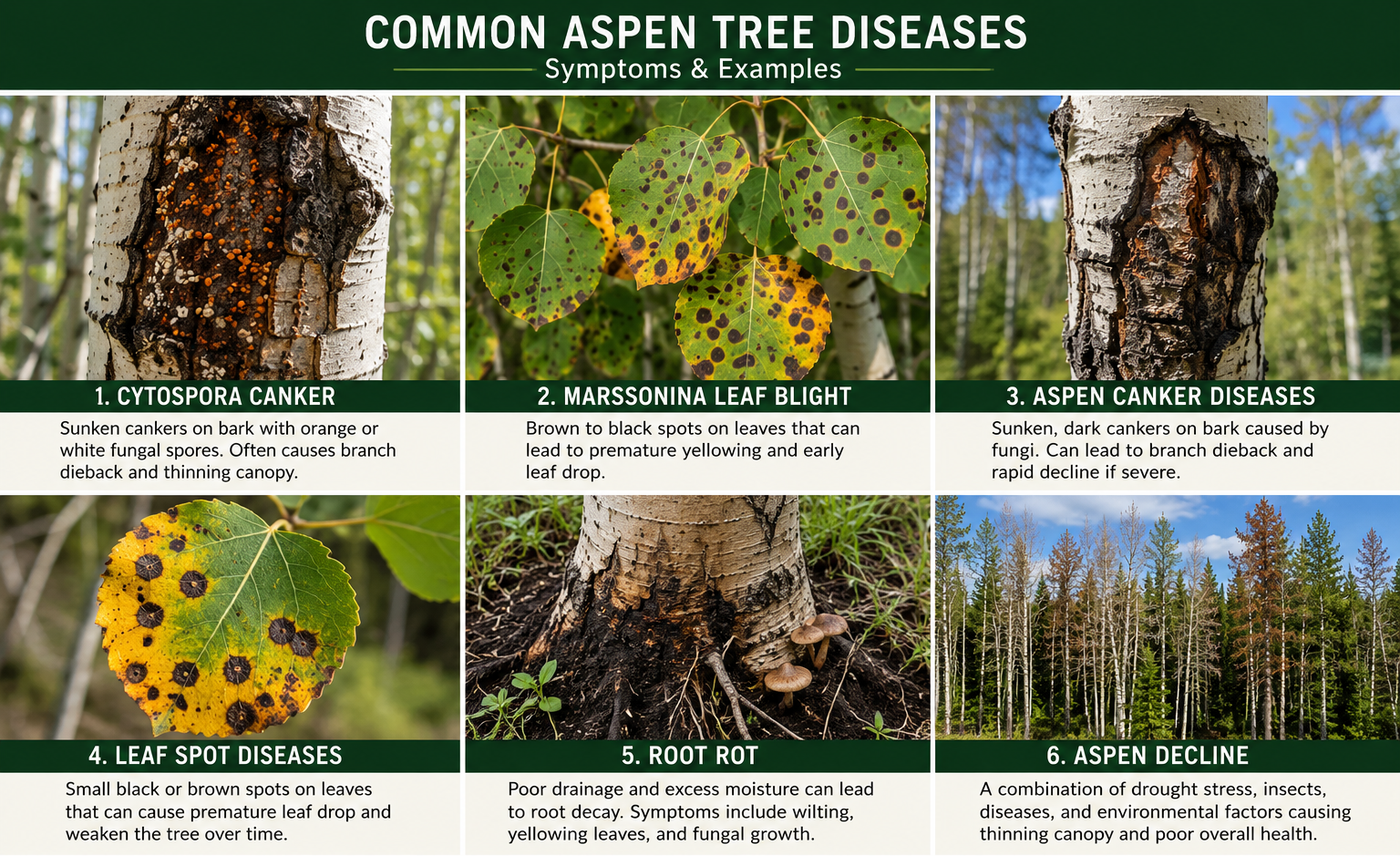
Cytospora Canker
Cytospora canker is one of the most common diseases affecting mature aspens. This fungal disease attacks stressed trees and causes branch dieback, trunk cankers, and eventual decline if left untreated.
Causes:
Cytospora fungi enter the tree through wounds, drought stress, sunscald, or winter damage. Stressed aspens are especially vulnerable.
Symptoms:
Sunken or discolored areas on branches and trunks
Orange or white fungal spores on bark
Branch dieback and thinning canopy
Oozing sap or dark staining on bark
Management:
Prune infected branches during dry weather
Improve watering practices during drought periods
Avoid damaging bark with lawn equipment
Maintain proper mulching around the root zone
Marssonina Leaf Blight
Marssonina leaf blight is a fungal disease that commonly affects aspens during wet spring and summer conditions. While it rarely kills trees outright, repeated infections can weaken aspens over time.
Causes:
The fungus spreads through rain splash, moisture, and poor airflow between trees.
Symptoms:
Brown or black spots on leaves
Premature yellowing or browning
Early leaf drop
Sparse canopy appearance
Management:
Rake and remove fallen leaves
Prune surrounding vegetation to improve airflow
Avoid overhead watering
Apply fungicides during severe outbreaks if necessary
Aspen Canker Disease
Several canker diseases can affect aspens, including sooty-bark canker and hypoxylon canker. These diseases attack the bark and vascular system, often causing rapid decline.
Causes:
Canker fungi typically infect stressed or wounded trees, especially during periods of drought or environmental stress.
Symptoms:
Dark, sunken bark lesions
Cracking or peeling bark
Dead branches and canopy thinning
Black fungal growth beneath bark
Management:
Remove severely infected trees to prevent hazards
Reduce tree stress through proper watering and soil care
Avoid injuring the trunk or root system
Monitor nearby aspens for signs of spread
Leaf Spot Diseases
Leaf spot diseases are common on aspens and can affect the tree’s appearance and vigor. While often cosmetic, repeated infections can weaken the tree over time.
Causes:
Fungal pathogens thrive during cool, wet weather and spread rapidly in dense stands of aspens.
Symptoms:
Small black or brown spots on leaves
Yellow halos surrounding spots
Premature leaf drop
Reduced fall color quality
Management:
Improve air circulation through selective pruning
Clean up fallen leaves and debris
Avoid excessive irrigation
Promote overall tree health with proper fertilization
Root Rot
Aspens have shallow root systems that are highly sensitive to poor soil conditions and excess moisture. Root rot can quickly lead to severe decline or tree failure.
Causes:
Poor drainage, compacted soils, and overwatering create ideal conditions for root rot fungi such as Phytophthora.
Symptoms:
Wilting or yellowing leaves
Stunted growth
Sparse canopy
Mushrooms or fungal growth near the base
Soft, decaying roots
Management:
Improve soil drainage
Avoid overwatering
Remove severely infected trees
Prevent soil compaction around root zones
Aspen Decline
Aspen decline is not caused by one single disease but rather a combination of environmental stress, drought, insects, and disease working together. This issue has become increasingly common throughout Colorado.
Causes:
Extended drought, poor watering practices, soil compaction, construction damage, and insect infestations can all contribute to decline.
Symptoms:
Progressive canopy thinning
Dead branches in upper canopy
Smaller leaves
Suckering at the base of the tree
Overall poor vigor
Management:
Deep water during dry periods
Mulch around the root zone
Reduce competition from turf grass
Have trees inspected regularly by a certified arborist
How to Treat Aspen Tree Diseases
Treating aspen tree diseases starts with proper identification and early intervention. Because many diseases share similar symptoms, professional diagnosis is often recommended.
Diagnosis:
An ISA Certified Arborist can determine the exact cause of decline and recommend the proper treatment plan.
Pruning:
Remove infected or dead branches to reduce disease spread and improve airflow.
Watering:
Aspens require consistent moisture, especially during Colorado’s dry summers and winters.
Mulching:
Apply organic mulch around the base of the tree to conserve moisture and regulate soil temperature.
Fungicides:
Some fungal diseases can be managed with preventative fungicide applications when caught early.
Tree Health Care:
Fertilization, soil conditioning, and proactive inspections can help strengthen stressed aspens.
How to Prevent Aspen Tree Diseases
Prevention is the most effective way to maintain healthy aspens and avoid costly removals.
Proper Planting:
Plant aspens in locations with well-drained soil and adequate room for root expansion.
Deep water regularly, especially during drought and winter months.
Avoid Soil Compaction:
Keep heavy equipment and excessive foot traffic away from root zones.
Monitor for Stress:
Watch for early signs of canopy thinning, bark damage, or leaf discoloration.
Avoid excessive pruning and always prune during appropriate times of the year.
Maintain Tree Health:
Healthy aspens are far more resistant to disease, insects, and environmental stress.
Aspen trees can be incredibly rewarding to have on your property, but they require proactive care and monitoring to stay healthy in Colorado’s climate. If you notice signs of disease, decline, or stress in your aspens, early action can make all the difference. Please give us a call today (719) 528-8141 or click the link below to set up a free evaluation and plan to keep your aspens healthy and vibrant for years to come.
Frequently Asked Questions:
-
Top-down dieback is often caused by drought stress, canker diseases, or root problems.
-
Black spots are commonly caused by fungal leaf diseases like Marssonina leaf blight.
-
Blackened, cracking, or peeling bark on an aspen tree can be a sign of canker diseases, sunscald damage, or fungal infections such as Cytospora canker. In Colorado, drought stress and intense sun exposure often weaken aspens, making them more vulnerable to bark damage and disease. An ISA Certified Arborist can help determine the exact cause and recommend the best treatment options.