
How a Late Spring Frost Impacts Trees in Colorado
Colorado homeowners know spring doesn't arrive and stay all at once. A week of warm 70°F days can coax buds open and new leaves out, only for overnight temperatures to plunge back below freezing. These late spring frosts are one of the most common and misunderstood threats to trees along the Front Range. Here's what happens when a freeze catches your trees off guard, how to recognize the damage, and what you can do to help them bounce back.
Why Late Spring Frosts Are So Damaging
Deep winter cold isn't usually what kills or injures most established trees they're built for it. The real danger comes from rapid temperature swings during spring, when warm days trigger trees to break dormancy and push out tender new growth. When a freeze hits after buds have already opened, ice crystals form inside the soft, water-rich cells of new shoots, leaves, and flowers. Those cells rupture, and the tissue dies.
Colorado's Front Range is especially prone to this problem. Elevations between 5,000 and 7,500 feet, dramatic day-to-night temperature swings, and late-season snow storms all combine to make late frosts a recurring challenge for homeowners from Castle Rock to Woodland Park.
Colorado Frost Fact: The average last freeze date for Colorado Springs is around May 9, but frost at or below 36°F can occur through late May. Trees that leaf out in early April may have nearly six weeks of frost vulnerability ahead of them.
How Frost Damage Affects Different Parts of a Tree
Frost doesn't affect every tree the same way, but the mechanism is consistent: the newest, most tender growth is always hit hardest. Mature bark, hardened wood, and dormant buds are well-insulated and generally come through unscathed. It's the parts that have already "woken up" for spring that are at risk.
New Leaves and Shoots
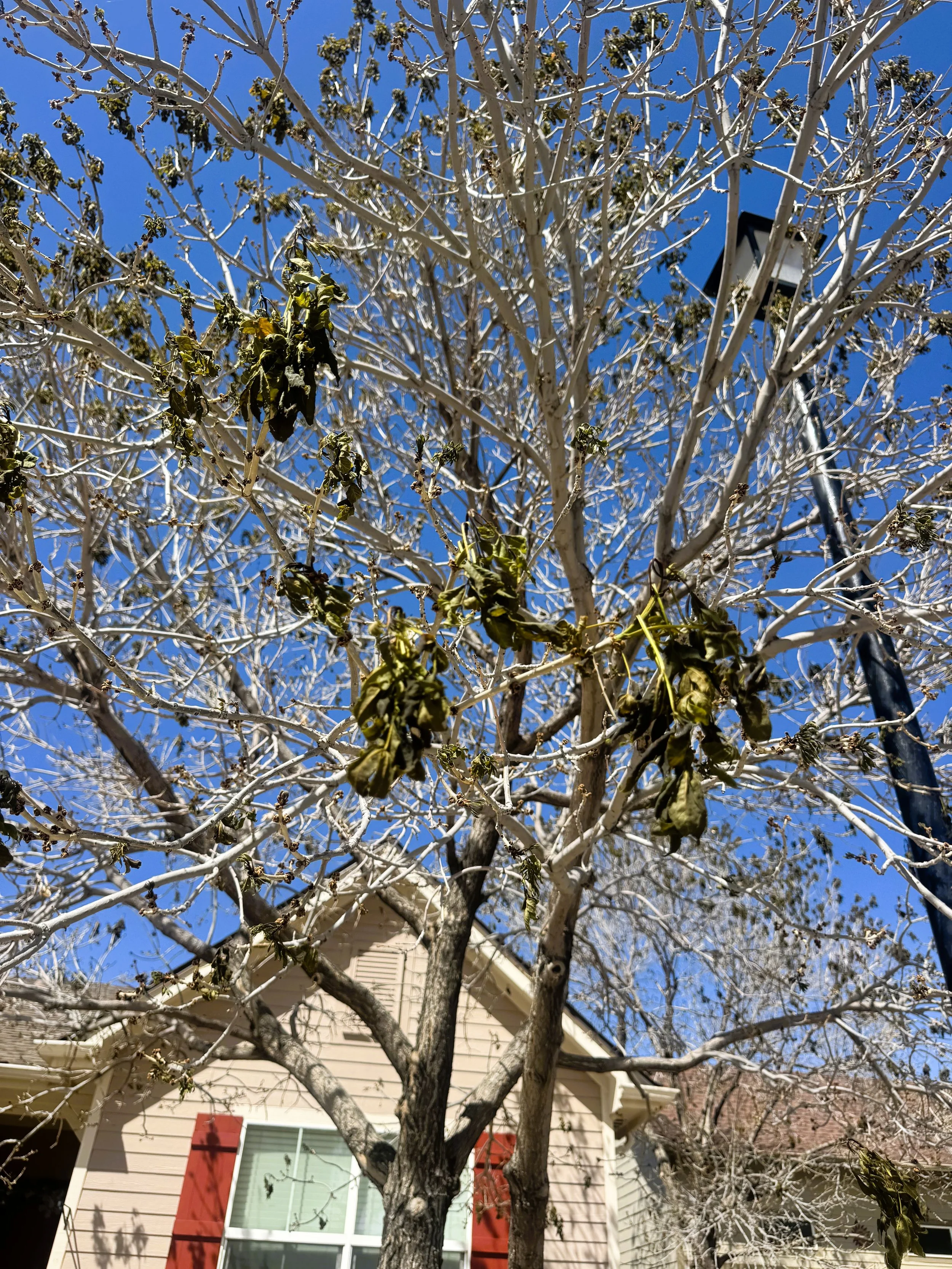
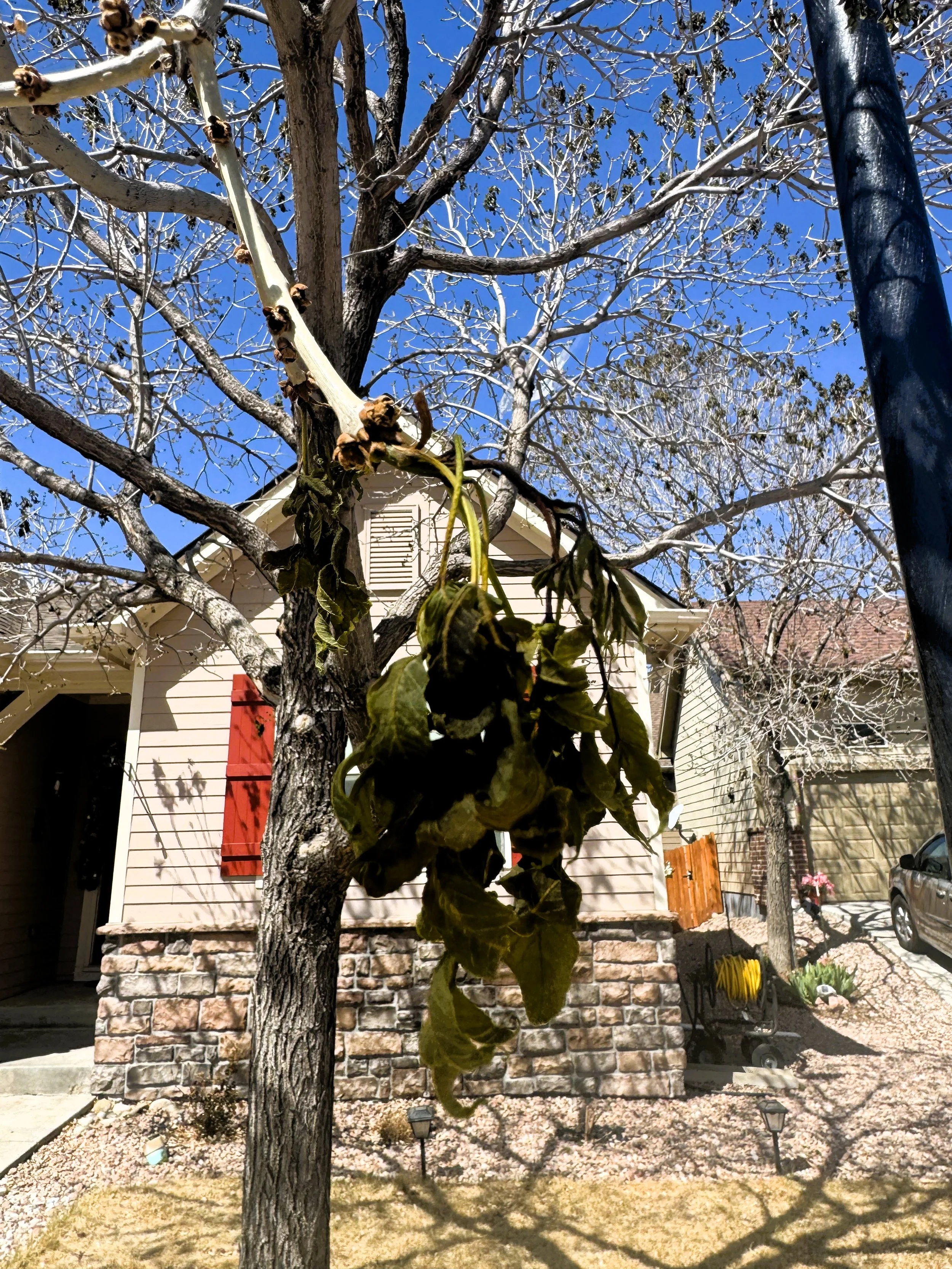
Young leaves and elongating shoots contain a high percentage of water and very thin cell walls. A hard frost kills this tissue quickly. Within a few days, you'll see browning, blackening, or wilting. The leaves may curl, go limp, and eventually drop. In most cases, healthy trees can activate dormant buds and push out a second round of growth, though that replacement foliage is often slightly smaller and less vigorous than the original.
Flowers and Fruit
Flowering and fruit trees are particularly vulnerable. If blooms or developing fruit are frozen, they typically cannot be replaced that season. For ornamental trees like crabapples or flowering plums, this means a disappointing spring display. For fruit-bearing trees like apple, cherry, or peach, a late frost can wipe out an entire season's crop.
Bark and Trunk (Frost Cracks)
Rapid temperature drops can also cause frost cracks which are vertical splits in the trunk that occur when the outer wood contracts faster than the inner layers. In Colorado, these cracks are most common on the south-facing side of trunks, where afternoon sun heats the bark before nighttime temperatures plummet. Frost cracks create entry points for fungi, bacteria, and insects.
Recognizing Frost Damage on Your Trees
Frost damage can look alarming, but it's important to distinguish it from disease or pest problems so you respond correctly. Here are the most common symptoms to watch for:
Shriveling & Wilting: New leaves appear wrinkled, curled, or deflated. They lose their bright green color and look dull or translucent.
Browning or Blackening: Damaged tissue turns brown or black within a few days of the freeze, indicating cells have been killed.
Limp, Drooping Growth: Shoots lose turgor and droop downward. Branches that were reaching upward suddenly hang limp.
Premature Leaf Drop: Damaged leaves fall weeks before normal. The tree sheds dead tissue to conserve energy for regrowth.
Mushy or Brown Flower Buds: Flower buds that had begun to show color turn brown, mushy, or simply fail to open after a freeze.
Bleached Evergreen Needles: Spruce, pine, and other evergreen needles may turn a pale, bleached yellow within 10 days of a hard frost.
Don't Confuse Frost Damage with Disease: Frost damage typically appears uniformly across the newest growth throughout the tree, whereas diseases like needlecast or tip blight tend to progress gradually and target specific branches. If you're unsure, one of our certified arborists can diagnose the issue and recommend the right course of action.
Which Colorado Trees Are Most Vulnerable?
Any tree can be affected by a late frost, but some species are at significantly higher risk especially those that leaf out early or have particularly delicate new growth. Trees growing in low-lying areas, frost pockets, or valley floors where cold air settles are also more exposed.
High Vulnerability:
Japanese Maple — Shriveled, blackened leaves; may leaf out again but weaker
Fruit Trees (Apple, Cherry, Peach) — Lost blooms and fruit for the season; brown flower buds
Crabapple & Flowering Plum — Reduced or absent spring bloom display
Magnolia — Broken stems, blackened leaves, reduced bloom
Moderate Vulnerability:
Blue Spruce — Bleached yellow needles on new growth
Austrian & Mugo Pine — Needle bleaching; candle-stage new growth damaged
Redbud — Brown, wilted leaves; recovers well if healthy
Maples (other varieties) — Crinkled leaf edges; usually rebounds quickly
Can My Trees Recover From Late Frosts?
The good news: most established, healthy trees can recover from a single late frost event. Trees have evolved backup systems for exactly this situation. Dormant buds—secondary growth points that didn't activate during the initial spring push—can sprout new leaves within weeks of the damage. While the replacement canopy may be thinner and the leaves somewhat smaller, the tree can still photosynthesize, build energy reserves, and prepare for winter.
However, recovery depends on several factors. Trees that were already stressed from drought, disease, poor soil, or previous frost events will have fewer energy reserves to draw on. Repeated frost damage over multiple seasons can compound the problem, gradually weakening a tree until it becomes susceptible to opportunistic pests and diseases.
The Bottom Line on Recovery: A healthy tree can almost always bounce back from frost damage. The key word is healthy. Trees that receive consistent care: proper watering, mulching, and professional evaluations are far more resilient when spring weather turns unpredictable.
How to Protect Your Trees Before and After a Frost
While you can't control Colorado's weather, there are practical steps you can take to reduce frost damage and support recovery when it happens.
1. Monitor Forecasts Through Late May: Don't let warm early-April days lull you into complacency. The Colorado Springs area can experience frost through mid-to-late May. Set weather alerts on your phone and pay attention to overnight low temperatures.
2. Cover Vulnerable Growth When Frost Is Forecast: Drape burlap, frost cloth, or old bed sheets over young trees and tender blooms before sunset. These coverings trap ground heat and shield tissue from freezing winds. Remove them once morning temperatures rise above freezing.
3. Water Deeply the Day Before a Freeze: Moist soil holds heat far better than dry soil. A thorough soaking of the root zone the day before an expected frost helps insulate roots and moderates ground-level temperatures around the tree.
4. Resist the Urge to Prune Right Away: After frost damage, it's tempting to start cutting. Wait at least three to four weeks. Many branches that look dead will push out new growth from dormant buds. Premature pruning removes tissue that may still be viable and adds additional stress to an already-taxed tree.
5. Mulch the Root Zone: A 2–4 inch layer of organic mulch around the base of the tree (but not touching the trunk) helps regulate soil temperature, retain moisture, and support root health during recovery. Healthy roots mean faster and more vigorous regrowth.
6. Choose Climate-Appropriate Species for New Plantings: If you're adding trees to your property, select species that are well-adapted to Colorado's elevation, dry climate, and spring frost risk. Native and regionally adapted varieties are inherently more resilient than non-native ornamentals.
Give Your Trees a Boost with Spring Fertilization
One of the most effective ways to help your trees recover from frost damage and build resilience against future stress is spring fertilization. When a tree loses new growth to a late freeze, it has to dig into its energy reserves to push out a second round of leaves. That takes a significant amount of nutrients. If the soil is depleted or lacking key minerals, the tree's recovery will be slower, weaker, and leave it more vulnerable to pests and disease heading into summer.
A professionally applied spring fertilizer delivers essential macronutrients like nitrogen, phosphorus, and potassium directly to the root zone, right when the tree needs them most. Nitrogen fuels the leafy regrowth a frost-damaged tree is working so hard to produce. Phosphorus supports root development and overall energy transfer within the tree. Potassium strengthens cell walls and improves the tree's ability to regulate water—both critical for surviving Colorado's dry climate and temperature swings.
Why Professional Fertilization Matters
Over-the-counter fertilizer spikes and surface-applied granules often don't reach the feeder roots where nutrients are actually absorbed. They can also deliver the wrong nutrient ratios for your specific trees and soil conditions. Colorado's alkaline, often clay-heavy soils present unique challenges. Iron and manganese deficiencies are common, and the wrong fertilizer can actually make nutrient lockout worse.
At Tall Timbers, our Plant Health Care team uses deep-root fertilization methods that inject a custom-blended nutrient solution directly into the soil at root depth. This ensures nutrients reach the tree's active root zone efficiently, improves soil aeration in compacted soils, and delivers the right balance of macro- and micronutrients based on what your trees and soil actually need.
Spring Fertilization: Think of spring fertilization as giving your trees a recovery toolkit. A frost-damaged tree that receives proper nutrition can produce stronger replacement foliage, rebuild energy reserves faster, and enter winter in far better condition. For trees that have experienced repeated stress from frost, drought, or disease, a Plant Health Care program that includes seasonal fertilization can make the difference between a tree that declines over time and one that thrives for decades.
When to Call a Professional Arborist
Most minor frost damage resolves on its own with time and warmer weather. But some situations call for professional evaluation. Contact a certified arborist if you notice frost cracks in the trunk, extensive canopy loss (more than 50% of leaves), a tree that fails to produce new growth within four to six weeks of damage, or signs that frost stress has triggered secondary problems like fungal infection or insect activity.
Our professionals can assess hidden damage that isn't visible from ground level, identify whether a tree's long-term health has been compromised, and design a recovery plan that may include targeted pruning, soil amendment, or plant health care treatments.
Worried About Your Trees After a Late Frost?
Our certified arborists at Tall Timbers Tree & Shrub Service are here to help. We serve Colorado Springs, Castle Rock, Monument, Black Forest, and surrounding communities.
Click the link below for a free tree health evaluation.